Home
Services ▼
Call +1-866-315-0243
The Problem With Repellent Sprays

THE REPELLENT SPRAY TRAP

  • 01
    Repellents kill visible workers only at the surface level
  • 02
    Colony detects the chemical barrier and splits into satellite nests
  • 03
    Satellite nests increase the colony's footprint throughout the structure
  • 04
    Problem spreads to new areas rather than being eliminated
The Correct Protocol

THE CORRECT APPROACH

  • 01
    Non-repellent bait is carried by workers directly to the queen
  • 02
    Colony cannot detect the active ingredient in non-repellent formulations
  • 03
    Population collapses from within over 3 to 10 days
  • 04
    Permanent elimination at the source, not redistribution

Professional Ant Control in Los Angeles: Stop Spraying, Start Eliminating

Repellent sprays scatter ant scouts, split colonies into satellite nests, and cause the population to spread. Non-repellent bait transfer technology reaches the queen. Show Me Pest Control uses the correct method in Los Angeles -- the one that ends the infestation instead of redistributing it.

Non-Repellent Protocol Species Identification Perimeter Barrier Colony Elimination
Call +1-866-315-0243 Now Free Estimate
Licensed Ant Control service in Los Angeles, CA - Show Me Pest Control

What Makes the Non-Repellent Protocol Work Where Sprays Fail

Four core protocols that produce colony-level elimination -- not surface suppression.

✓

Species Identification Determines Protocol

Before opening a product, your technician confirms the species. Argentine ants, carpenter ants, fire ants, and pavement ants respond to different bait types in different concentrations placed in different locations. Species ID is not optional -- it is the first step.

✓

Non-Repellent Bait Transfer Technology

The active ingredient in non-repellent bait is undetectable to the ant. Workers carry it back to the harborage zone and pass it to other workers, to the queen, and to the developing brood. The collapse is colony-level, not surface-level.

✓

Non-Repellent Exterior Perimeter Treatment

The perimeter treatment uses the same principle as the gel bait: non-repellent so the colony cannot detect and avoid it. Workers cross the treated zone, carry residual back to the nest, and spread it through the population. The exterior and interior treatments work together.

✓

Carpenter Ant Void Treatment

When carpenter ants establish in a structural wood member, the correct treatment is void injection into the gallery, not surface spray near the activity. We locate the gallery, inject insecticide directly, and apply a barrier at the entry corridor to prevent re-establishment.
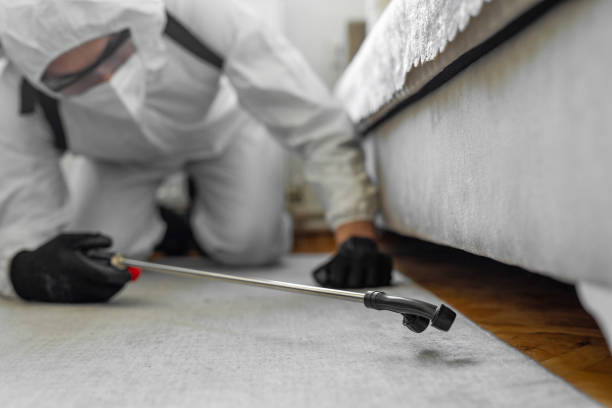
Professional Ant Control technician working in Los Angeles, CA

Why Ants Come Back After Every Spray Treatment

An ant colony is not a surface phenomenon. The workers you see foraging across your countertop are a small fraction of a population that may number in the thousands to hundreds of thousands depending on species. The queen, the developing brood, and satellite nest chambers are in harborage locations your spray product never reaches. When a repellent insecticide contacts the trail, the colony responds by splitting and relocating -- a survival response that has been refined over millions of years. The result is that the spray disrupts the visible symptom while expanding the underlying problem.

Trophallaxis is the mechanism that makes colony-level elimination possible. When non-repellent bait is placed in the harborage zone or at a point where foragers return with food, they share it directly with the queen and the developing larvae. The active ingredient spreads through the entire population because no ant in the colony can detect it. The collapse timeline is 3 to 10 days for most species, depending on colony size and the level of bait acceptance.

Sprayed multiple times and the ants are still there in Los Angeles? Call +1-866-315-0243. Our technician in Los Angeles identifies the species, selects the correct non-repellent bait, and places it in the harborage zone where the colony actually lives.

A separate failure mode with consumer bait is aversion development. When an ant colony has been exposed to a bait formulation multiple times, it develops a behavioral avoidance response -- workers begin to identify the attractant compound as a threat rather than a food source. This is why the hardware store bait works the first time a homeowner places it, then stops working when they replace the station with the same product. Professional programs use rotating formulations and professional-grade attractants specifically designed to prevent this aversion cycle.

Carpenter ant treatment begins with confirming that you have carpenter ants rather than any other large black ant species, and confirming that an active gallery exists within the structure. Coarse sawdust-like frass near structural wood members, particularly window headers, door frames, sill plates, and roof soffits -- especially where moisture damage is present or was repaired in the past -- is the primary diagnostic sign. Hollow-sounding timbers when knocked and large black ants near the frass location confirm the assessment. Void injection delivers the active ingredient directly to the gallery where the colony is nesting, rather than spraying the surface where foragers are observed.

Seasonal ant pressure in Los Angeles, CA follows a predictable pattern that affects both the timing of infestations and the effectiveness of different treatment approaches. In spring, ant colonies enter a budding phase -- queens produced the previous fall begin establishing new satellite nests, and the overall population expands rapidly. This is when homeowners typically notice the first indoor trails of the season, as expanding colonies push foragers into new territory including interior spaces. Summer pressure peaks during periods of heat and drought, when ants search for water and food sources inside cooled structures. Fall ingress occurs as temperatures drop and colonies seek the thermal stability of wall voids and foundation spaces before the first cold period. A recurring annual treatment program timed to address the spring budding phase and maintain a non-repellent perimeter through the summer and fall is the most cost-effective long-term approach for properties with persistent ant pressure.
24/7 Emergency Ant Control experts in Los Angeles, CA

Get a Free Estimate

Species identified, harborage zone mapped, protocol explained -- on the first call.

Call +1-866-315-0243

Ant Control Services in Los Angeles, Los Angeles, CA

From initial species assessment through seasonal prevention programs -- each service supports colony-level elimination.

Reliable Ant Control contractor in Los Angeles, CA by Show Me Pest Control

Ant Species Identification and Colony Assessment

The first step in every ant treatment is species confirmation. The protocol follows from that -- not the other way around.

Non-Repellent Gel and Granular Bait Treatment

Gel bait placed in the correct location -- the harborage zone, not the trail -- collapses the colony from within over 3 to 10 days.

Exterior Non-Repellent Perimeter Barrier

A non-repellent exterior barrier used with gel bait creates two simultaneous pathways for the active ingredient to reach the colony.

Carpenter Ant Void Injection Treatment

Carpenter ant treatment requires direct gallery access. Void injection delivers the active ingredient to the source -- not to the foragers you can see.

Fire Ant Mound and Broadcast Treatment

Individual mound treatment and broadcast granular treatment for fire ant pressure in yards and lawn areas. Fire ant populations in Los Angeles, CA can develop rapidly in warm months -- early season treatment prevents mound establishment.

Recurring Seasonal Ant Prevention Program

Spring, summer, and fall visits timed to address the colony expansion phases that produce indoor pressure. A prevention program is consistently more economical than repeated reactive treatments.

What Happens When You Call Show Me Pest Control About Ants in Los Angeles

Clear, sequenced, no surprises.

1

Call -- Species Identified by Phone or On-Site

Describe what you are seeing. We narrow the species before the visit and confirm on-site. The protocol is determined by the species, not a generic plan.

2

Non-Repellent Bait Placed in Harborage Zones

We locate the harborage zone before placing bait. The placement location is more important than the product.

3

Perimeter Treatment Applied at Exterior

Exterior non-repellent perimeter creates a second transfer pathway. Both treatments work simultaneously to collapse the colony.

4

Follow-Up Confirms Colony Collapse

Follow-up confirms activity trending to zero. If secondary nests are present, they are identified and treated at this visit.

Verified Results From Show Me Pest Control in Los Angeles

Real outcomes from Los Angeles homeowners who had tried the spray approach first.

★★★★★
I thought the ants were coming from outside. Show Me Pest Control found the satellite nest inside the wall in the kitchen. The bait placement was in a location I would never have thought to put it. Colony was gone within 10 days.
Homeowner, Los Angeles, Los Angeles, CA
★★★★★
Every trap I bought the ants walked right past. Show Me Pest Control said the colony had been exposed to that formulation too many times and was conditioned to avoid it. Professional bait placed in the harborage zone, not on the trail. Activity dropped within 72 hours.
Homeowner, Los Angeles, CA
★★★★★
Found large black ants near my living room window and a pile of coarse sawdust in the windowsill. A previous pest company told me it was just regular ants and sprayed around the outside. Show Me Pest Control immediately identified it as a carpenter ant gallery in the window header. Void injection, sealed the entry point. No frass production at the 3-week follow-up. That spray company missed it completely.
Homeowner, Los Angeles, Los Angeles, CA
Affordable Ant Control solutions in Los Angeles, CA

Ant Treatment Questions -- Show Me Pest Control Answers

Repellent products at the surface create a detection signal the colony responds to by splitting and relocating satellite nests away from the treated zone. The population is not reduced -- it is redistributed, often into new areas the homeowner had not previously seen ants. Non-repellent bait placed in the harborage zone reaches every level of the colony including the queen, and the population collapses within 3 to 10 days because the colony never detects the active ingredient.
Carpenter ants are significantly larger than most home-invading ants -- typically 1/4 to 1/2 inch in length -- and are most often black or a combination of black and red. The key behavioral difference is that carpenter ants do not eat wood. They excavate it for nesting galleries, particularly in soft, moisture-damaged, or hollow wood members. The diagnostic sign is frass: coarse, granular sawdust mixed with ant body parts found near structural wood -- window frames, door frames, sill plates, rafters. Common house-invading ants such as odorous house ants and pavement ants are much smaller, forage for food, and nest in soil or wall voids rather than in wood.
Three to 10 days for colony collapse is the standard range for professional non-repellent gel bait. Larger colonies and colonies with deep harborage zones may require closer to the upper end of this range. Increased forager activity at the bait station in the first 48 hours indicates excellent bait acceptance and is a positive sign. If no activity decrease is visible by day 7, we re-evaluate placement location and bait formulation -- sometimes a different attractant is needed for a species that has developed aversion.
Professional gel bait products are placed in protected locations -- inside cabinet toe-kick cavities, behind appliances, in wall voids adjacent to the harborage zone -- specifically to prevent pet and child contact. The active ingredient concentration in professional gel bait is significantly lower than in consumer spray products. We provide specific re-entry guidelines and placement documentation for every treatment so you know exactly where products were placed and what precautions apply.
We treat fire ant mounds and the surrounding lawn area. Mound treatment eliminates the visible population. Broadcast treatment prevents the satellite mound establishment cycle that typically produces 20 to 40 new mounds per season on an untreated property in Los Angeles, CA. The timing and formulation are selected based on the season and the density of the existing mound population.
The standard ant treatment protocol involves an initial visit and a follow-up at 10 to 14 days. The follow-up is the visit where colony collapse is confirmed and any secondary satellite nests are identified and treated. In most cases, two visits are sufficient for complete elimination. Recurring seasonal programs are recommended for properties with seasonal re-pressure from adjacent colonies, but they are a maintenance tool rather than a treatment necessity for the initial infestation.

Ready to End the Ant Problem?

Same-day assessment in Los Angeles. Species identification and non-repellent bait placed on the first visit.

Call +1-866-315-0243

Serving Los Angeles and surrounding Los Angeles, CA communities
Top rated local Ant Control specialists in Los Angeles, CA

Our Services in Los Angeles, CA

Los Angeles (US: /lɔːs ˈændʒələs/ i lawss AN-jəl-əs; Spanish: Los Ángeles , lit. 'The Angels'), often referred to by its initials L.A., officially the City of Los Angeles, is the most populous city in the U.S. state of California. With roughly 3.9 million residents within the city limits as of 2020, Los Angeles is the second-most populous city in the United States, behind only New York City; it is the commercial, financial and cultural center of the Southern California region. Los Angeles has a Mediterranean climate, an ethnically and culturally diverse population, in addition to a sprawling metropolitan area.

Zip Codes in Los Angeles, CA that we also serve: 90291 90293 90292 91316 91311 90035 90034 90037 90031 90039 90008 90004 90005 90006 90007 90001 90002 90003 91504 90710 90089 91306 91344 91345 91340 91342 91343 90036 90247 90248 91436 91371 91608 91605 91604 91607 91606 91601 91602 90402 90068 90069 90062 90063 90061 90066 90067 90064 90065 91326 91324 91325 90013 90012 90011 90010 90017 90016 90015 90014 90019 90095 90094 91042 91040 91411 91352 91356 90041 90042 90043 90044 90045 90046 90047 90048 90049 90018 91423 90210 91303 91304 91307 90079 90071 90077 91331 91330 91335 90026 90027 90024 90025 90023 90020 90021 90029 90272 90732 90731 90028 90230 91406 91405 91403 91402 91401 91367 91364 90033 90032 90038 90057 90052 90059 90058 90744 90501 90502 90009 90030 90050 90051 90053 90054 90055 90060 90070 90072 90074 90075 90076 90078 90080 90081 90082 90083 90084 90086 90087 90088 90093 90099 90134 90189 90213 90294 90295 90733 90734 90748 91041 91043 91305 91308 91309 91313 91327 91328 91329 91333 91334 91337 91346 91353 91357 91365 91392 91393 91394 91395 91396 91404 91407 91408 91409 91410 91412 91413 91416 91426 91470 91482 91495 91496 91499 91603 91609 91610 91611 91612 91614 91615 91616 91617 91618

Cities Close To Los Angeles, CA That We Also Serve


Ant Control Express #1
★ 4.9 (120+ Reviews)
Dispatch Center, CA
Call +1-866-315-0243
Ant Control Express #2
★ 4.9 (120+ Reviews)
Dispatch Center, CA
Call +1-866-315-0243
Ant Control Express #3
★ 4.9 (120+ Reviews)
Dispatch Center, CA
Call +1-866-315-0243
Ant Control Express #4
★ 4.9 (120+ Reviews)
Dispatch Center, CA
Call +1-866-315-0243
Ant Control Express #5
★ 4.9 (120+ Reviews)
Dispatch Center, CA
Call +1-866-315-0243
Ant Control Express #6
★ 4.9 (120+ Reviews)
Dispatch Center, CA
Call +1-866-315-0243
☎ Call Now
🟢 Techs On Duty in Los Angeles, CA Call +1-866-315-0243